So these last few weeks I've been back with my host family in Pilar. Very little about the city itself has changed. A few more streets have been paved, there's a new dispensa across the street, the "Castiglioni Presidente" signs from 2008 are now pink instead of red, some different stray dogs follow me around, Hamburgueseria Milenio is actually indoors now, but that's about it. Mostly everything is exactly how I remember it, with the added bonus of not having to deal with school this time around.
My first weekend here in Pilar was my cousin Lauri's fifteenth birthday. As in most of Latin America, 15th birthdays are a huge deal in Paraguay, so just after midnight on the day of her birthday, I got to go with a group of her family and friends to her serenata. The two singers who came with guitars did an amazing job, and the celebration went on for a few hours, though I left around 2am.
I've been watching a lot of soccer (Copa Libertadores). Cerro Porteño, a Paraguayan team, beat the Jaguares (from Mexico), but unfortunately lost to the Brazilian team Santos. They still have the regular season though, and this wednesday I'll be at their game in Asunción! I'm super excited since this will be my first real soccer game in Paraguay. After the game in Asunción, I'll be heading to Ciudad del Este to visit a friend, then to Encarnación to see some Jesuit ruins, and then on to Argentina and Uruguay for a week or two.
In the time that hasn't been taken up with wandering aimlessly around the city and hanging out with my host family, I've been working on the project that got me the grant to come here. I'm doing research on bilingualism in schools by talking to teachers and administrators, observing classes, and analyzing print materals. I've visited a few schools and looked at a bunch of books/notes, and so far everything is going well. The teachers here have been amazing about having me drop by with little to no notice and giving me the information that I need. Most of my work so far has been with schools in the city center, but I have one last visit lined up tomorrow at a school on the outskirts of town, where the students are coming from a much more rural environment, so hopefully I'll be able to get some contrasting information there.
For my part in Paraguayan-style bilingualism, I've been studying Guarani as much as possible and I feel like I'm actually making a bit of progress. I'm obviously still far from fluent, but I've been picking up bits and pieces in conversations, and a lot of what I learned last time and forgot has been coming back to me. I hope to be able to actually continue studying once I go back, now that there are so many more materials available online than there were a few years ago. I love the language, and I love those triumphant moments that come when you actually understand something that you hear all the time, or can deconstruct a phrase that you've known for a while and see how it's actually put together. The random Guarani trivia for this entry is that the word for "pray" also means "learn" and that the guarani word for "mass" (as in church) breaks down into "big prayer".
The weather here has been almost identical to how spring was in Beloit, except with the important difference that in Beloit, we were celebrating the warm weather and wearing summer clothes, and here in Paraguay, people are wearing hats and boots. I've mostly been in jeans and short sleeves, but even so, nobody can seem to believe that I'm not freezing. I'm getting slowly accustomed to the climate though, and had to break out sweaters the last few days (though not today). It'll also be colder as I get further south into Argentina and Uruguay, plus I'll have the ocean to contend with.
I've also been enjoying Paraguayan food again. I've been on a veritable empanada tour of not just Pilar, but half the continent thanks to the 2-day trip it took to get here. Paraguay's empanadas are by far my favorites, though the Colombian ones weren't bad either. I was not a fan of the Peruvian mushroom-chicken-pepper concoction that was made into an empanada, but I think they were trying to be fancy, so maybe more normal ones are better. I've already had most of the foods that I missed, including sopa paraguay, mbeju, chipa, mandioca, chipa guasu, bori bori, terere, dulce de leche, guaraná soda, and the Turkish-Paraguayan hybrid of Lomito Árabe/Döner Dürüm. I'm still not quite sure how that managed to retain its popularity as fast food on the voyage with immigrants from Syria and Lebanon to Paraguay, but it did, and no matter what continent it's on (and I can speak for 4 of the 6) it's good.
There are significantly more exchange students in town now than when I was here. There were only two of us for the vast majority of my time in Pilar, but now, I know of at least 5. There are also a few new Peace Corps volunteers around town, including a volunteer who's working in a school, which gives me some hope that I might actually be placed here should I ever make it into the Peace Corps. Paraguay LOVES its PC volunteers. Everyone in town seems to know them, and the national governement dedicated a series of stamps to the 40 year anniversery of PC in Paraguay. I hope that I'll be back in Paraguay as a volunteer in a few more years, but we'll see.
I started trying again, and promptly gave up on making sense out of so much here. There's still the eye doctor in Pilar who advertises for contacts with pictures of blue-eyed lemurs. Bus number 18.2 is still running in Asunción. Furniture and cell phones are naturally sold in the same stores, exclusive of anything else. I saw a guy riding a motorcycle in circles-- on the back of a flatbed truck. I passed a business in Asuncion called "Pizza, pero sólo para llevar" which means (Pizza, but only for takeout). The guy I sat next to in the Asunción bus terminal had "Santa Claus is Coming to Town" as his ringtone, in English and in May. I bought lunch from a place called "Soon" in Asunción. I just don't get it sometimes, but I think that might be part of the reason why I love it here. It doesn't make sense, and nobody seems to think that it should.
Showing posts with label AFS Paraguay. Show all posts
Showing posts with label AFS Paraguay. Show all posts
30 May 2011


28 April 2011
18 Days
I got my grant results back in March, and bought my tickets a few weeks back. I'm going to Paraguay! I leave on May 16th, a week after exams end, and 18 days from now. I'll be flying Milwaukee-Atlanta-Miami-Bogotá-Lima-Asunción on the way there, and Asunción-Lima-San Jose-Miami-Atlanta-Milwaukee on the way back on the 22nd of June. Hopefully I'll be able to squeeze a trip to Uruguay in there somewhere, both financially and time-wise. I'll be doing research on bilingual (Spanish-Guaraní) education.
I'm finally going back!
I'm finally going back!
28 November 2009
A few months later...

It's been almost 5 months since I left Paraguay, but some things in my life are still Paraguayan. I still have mate and tereré on a regular basis, though not as often as I wish I did. Yerba is ungodly expensive here, and postage from Paraguay is a bit pricey, especially by Paraguayan standards, so I'm trying to stretch what I still have.
For those of you who didn't follow my blog while I was in Paraguay or those of you not familiar with Paraguay, tereré is a kind of tea. See the picture for a visual. It's made out of loose leaves
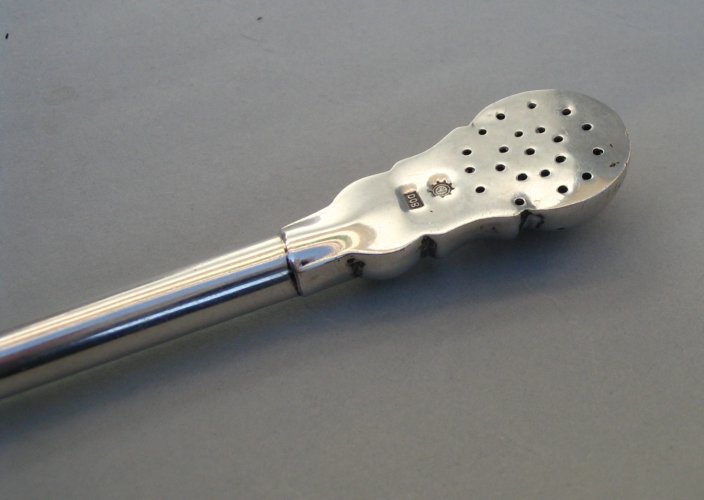 (yerba) and icy water. It is drunk out of a cup made out of metal, wood, or horn called a guampa, and drunk through a metal straw called a bombilla (see picture) that has lots of tiny holes in the bottom so that you don't drink the leaves. Mate is basically the same thing, except hot water is used in place of cold water. Tereré is a social activity in Paraguay. Whenever you go to a friend's house, you can be sure that they'll offer you terere (in the warmer months) or mate (in the early morning and cold months). From the high-class Asunceños (residents of Asunción) to the campesinos (farmers) in the middle of nowhere, everyone drinks terere. On sweltering February afternoons, the best thing to do is just sit with some friends and tomar un terere.
 Besides terere on a somewhat-regular basis, I've made Paraguayan food several times. Mbejú is a favorite, and I attempted chipa once. One Sunday a few weeks ago, my Japanese AFS sister, the inbound from Paraguay, and I had a cooking day, and we made mbeju, mandi'o chyryry, mandioca frita, empanadas, and pizza de palmito y huevo. Mbejú is a traditional food made out of cheese, tapioca flour, corn flour, milk, and salt that looks something like a pale-yellow-ish white pancake. Mandi'o chyryry is a dish made with boiled cassava/yucca/mandioca, eggs, and cheese. Mandioca frita is simply fried cassava. Empanadas are basically amazing. They're little fried, folded-over pockets filled with some combination of eggs, vegetables, spices, beef, chicken, cheese, mandioca, peppers, corn, or anything else you could want. Most of these were successfully made, but the mbeju was a little crumbly.
All these crazy words like "mandi'o chyryry" and "mbejú" are Guaraní, if you were wondering. Guarani is an Amerindian language spoken in central South America, that happens to be one of the two official languages of Paraguay (the other being Spanish, of course). I put a handy little phrase list and pronunciation guide on the right hand side of this blog, but if you're looking to (for whatever crazy reason) learn more than a few phrases, I highly recommend that you head on over here. "Here" is a blog/podcast designed to teach/help English-speakers learn Guaraní. It's created by a Peace Corps volunteer who's currently in Yataity, Guaira, Paraguay. I've been using it to learn more advanced Guarani, to add to my lovely bank of insults/swear words that my compañeros so excitedly taught me (Apparently teaching the rubia to yell "Japiro! Ñama kota!" is hilarious...who knew?). Ok, maybe I learned more than that, but in all honesty, I'm still a ways away from proficiency with Guarani Guarani as opposed to Jopará, which is Guarani mixed with Spanish.
Nearly 5 months later, and sigo llevando mucho de Paraguay en mi corazón. I'm still perpetually late, though I at least try now. I don't stress about the little things, and I still think our houses are huge, are roads are amazingly smooth, and everything is expensive. School is still dull, and I still think that people have no balance in their lives. It's all school-work-money or all party-drinking-puking with very little middle ground. The empanada/Ades/alfajór/guaraná cravings still come every now and then. Pepsi is too sweet after a semester of nothing but Coke. My brain still switches to Spanish on a fairly regular basis, and a decent-sized chunk of my iTunes library is devoted to Reggaeton, Cumbia, and Bachata.
I see that this blog is still being read quite often, and I assume that at least some readers are perspective exchange students to Paraguay. If anyone is considering going to Paraguay, feel free to leave your email address in a comment, and I can hopefully answer some of your questions. About a year ago, I was trying to research Paraguay and came up with football/soccer scores, colonial maps, and info on the Chaco, Yguazú falls, and the Itaipú dam. I know that there is basically no information out there about Paraguayan school, food, transportation, or really anything else you really want to know.
15 April 2009
Updates
Last week I got letters and pictures from my cousins, the Pitrof kids: Sydney, Olivia, Tony, and Sam, which my host family thinks they're adorable. So to start off this entry, I'll answer the questions they asked in their letters.
Do you like your new home?
Yes, I do. My house is between the center of town and the countryside, so I'm close to both. There are currently 8 of us living in the house, so it's a pretty big change, but I like it. Mostly, I like our yard though. Growing in the yard we have grapes, avocados, grapefruits, limes, apples, and a few fruits I haven't figured out the names of yet.
How's the food?
The food here is actually pretty good. It's pretty similar to US food, with slightly different ingredients and very different names. In the morning, breakfast is usually chocolate milk or coffee and bread. Lots of times we have snacks at the school's cantina, maybe a half-sandwich, some cookies, or an empanada. Lunch is the biggest meal of the day, and is a lot like dinner in the US. Usually there's some kind of grain (rice, pasta, mbeyu, borí, sopa paraguaya) with some sort of meat or vegetable and mandioca. We have merienda in the late afternoon. It's usually a lot like breakfast, except maybe with a bananaor yogurt. Dinner is really late, and we almost never eat it during the week. On weekends, I usually go out to eat with friends for dinner.
Did you teach them how to play football?
Here, "futbol" is soccer, but I'm working on teaching my little brothers how to play "futbol americano" which is what they call what we know as football. I can't say that I've been successful in teaching them the rules/format, but they love playing with the weird-shaped ball.
What sports are there?
In my city, basketball is actually the most popular sport, with soccer, tennis, and volleyball also being pretty popular. In the rest of the country, however, soccer is the most popular sport. Because basketball is only popular in my city, most people are fans of one of the national soccer clubs as well as a local basketball team. Volleyball and tennis aren't really watched, but lots of people play them for fun.
Do they know English?
Well, my English teacher does! English here is like Spanish class there. Other than her, I know a Peace Corps volunteer from California who lives in my city, an AFS returnee who lived in Chicago for a year, and a Mormon missionary who speak English well. There are a few people around who speak a little English, but mostly everyone just speaks Spanish and Guaraní. In the big cities like Asunción and Ciudad del Este there are more people that speak English. On the border with Brazil, cities like Ciudad del Este and Pedro Juan Caballero, a lot of people actually speak Portuguese more often than Spanish. In the countryside, everyone speaks Guaraní and some people don't speak Spanish. In my city almost everyone is fluent in Spanish and almost-fluent in Guaraní.
Are there TVs there?
Of course! The most popular show here is The Simpsons. Almost all of the programs come from other countries, and a lot of them just have subtitles instead of being dubbed. Because of this, there are programs from the USA, Brazil, Thailand, Korea, the UK that are just subtitled in Spanish. Other shows come from Mexico, Puerto Rico, Colombia, Venezuela, and Argentina.
Is it fun there?
Sometimes! I don't think some things like math class are fun in any part of the world though.
Is it ever cold or is it always warm?
It's never cold like it is in Wisconsin! It never snows. So far, it's been between 80 and 100 degrees Fahrenheit most days. Because Paraguay is in the Southern Hemisphere, the seasons are the opposite of what they are in the United States. It's spring in the US, but it's fall here. When we have summer vacation, it's the middle of winter here. Christmas is usually one of the hottest days of the year! It will get cooler in the winter, but it usually doesn't get below 40 or 50 degrees Fahrenheit.
What's your brother and sisers names?
My oldest sister is names Patricia, but it's pronounced "pa-tree-see-uh" in Spanish. She's 16, and will be coming to the USA for a year in August as an AFS exchange student. She's in my grade at school, but in the other class that specializes in business.
My oldest brother's name is Victor. He's 14 and plays soccer.
My other brother's name is Anibal (ah-NEE-bahl). He's 10, and also plays soccer and violin.
Also living with us is my 12-year-old cousin Laura and my grandpa, plus my parents, of course.
Easter here is basically not celebrated. More important is Semana Santa, the week before Easter. I didn't have school last week Wednesday, Thursday, or Friday, and there were activities instead of classes on Tuesday. I got to meet some of my "extended family" from Asunción last week. There's a HUGE fishing competition in my city over Semana Santa, but nobody cares about the fish anymore. It's more about going to the park and the beach for the music and food, and we luckily had GREAT weather for it.
It's finally not so sweltering hot, but it's still in the 80s daily. Due to this change, my school has started letting us wear our gym pants instead of our skirts, which is a cause for celebration. School is still REALLY different here. There are no text books (there's no money for text books) and we stay with the same people all day. The classes are only one or two times a week, so not too much gets done...
Do you like your new home?
Yes, I do. My house is between the center of town and the countryside, so I'm close to both. There are currently 8 of us living in the house, so it's a pretty big change, but I like it. Mostly, I like our yard though. Growing in the yard we have grapes, avocados, grapefruits, limes, apples, and a few fruits I haven't figured out the names of yet.
How's the food?
The food here is actually pretty good. It's pretty similar to US food, with slightly different ingredients and very different names. In the morning, breakfast is usually chocolate milk or coffee and bread. Lots of times we have snacks at the school's cantina, maybe a half-sandwich, some cookies, or an empanada. Lunch is the biggest meal of the day, and is a lot like dinner in the US. Usually there's some kind of grain (rice, pasta, mbeyu, borí, sopa paraguaya) with some sort of meat or vegetable and mandioca. We have merienda in the late afternoon. It's usually a lot like breakfast, except maybe with a bananaor yogurt. Dinner is really late, and we almost never eat it during the week. On weekends, I usually go out to eat with friends for dinner.
Did you teach them how to play football?
Here, "futbol" is soccer, but I'm working on teaching my little brothers how to play "futbol americano" which is what they call what we know as football. I can't say that I've been successful in teaching them the rules/format, but they love playing with the weird-shaped ball.
What sports are there?
In my city, basketball is actually the most popular sport, with soccer, tennis, and volleyball also being pretty popular. In the rest of the country, however, soccer is the most popular sport. Because basketball is only popular in my city, most people are fans of one of the national soccer clubs as well as a local basketball team. Volleyball and tennis aren't really watched, but lots of people play them for fun.
Do they know English?
Well, my English teacher does! English here is like Spanish class there. Other than her, I know a Peace Corps volunteer from California who lives in my city, an AFS returnee who lived in Chicago for a year, and a Mormon missionary who speak English well. There are a few people around who speak a little English, but mostly everyone just speaks Spanish and Guaraní. In the big cities like Asunción and Ciudad del Este there are more people that speak English. On the border with Brazil, cities like Ciudad del Este and Pedro Juan Caballero, a lot of people actually speak Portuguese more often than Spanish. In the countryside, everyone speaks Guaraní and some people don't speak Spanish. In my city almost everyone is fluent in Spanish and almost-fluent in Guaraní.
Are there TVs there?
Of course! The most popular show here is The Simpsons. Almost all of the programs come from other countries, and a lot of them just have subtitles instead of being dubbed. Because of this, there are programs from the USA, Brazil, Thailand, Korea, the UK that are just subtitled in Spanish. Other shows come from Mexico, Puerto Rico, Colombia, Venezuela, and Argentina.
Is it fun there?
Sometimes! I don't think some things like math class are fun in any part of the world though.
Is it ever cold or is it always warm?
It's never cold like it is in Wisconsin! It never snows. So far, it's been between 80 and 100 degrees Fahrenheit most days. Because Paraguay is in the Southern Hemisphere, the seasons are the opposite of what they are in the United States. It's spring in the US, but it's fall here. When we have summer vacation, it's the middle of winter here. Christmas is usually one of the hottest days of the year! It will get cooler in the winter, but it usually doesn't get below 40 or 50 degrees Fahrenheit.
What's your brother and sisers names?
My oldest sister is names Patricia, but it's pronounced "pa-tree-see-uh" in Spanish. She's 16, and will be coming to the USA for a year in August as an AFS exchange student. She's in my grade at school, but in the other class that specializes in business.
My oldest brother's name is Victor. He's 14 and plays soccer.
My other brother's name is Anibal (ah-NEE-bahl). He's 10, and also plays soccer and violin.
Also living with us is my 12-year-old cousin Laura and my grandpa, plus my parents, of course.
Easter here is basically not celebrated. More important is Semana Santa, the week before Easter. I didn't have school last week Wednesday, Thursday, or Friday, and there were activities instead of classes on Tuesday. I got to meet some of my "extended family" from Asunción last week. There's a HUGE fishing competition in my city over Semana Santa, but nobody cares about the fish anymore. It's more about going to the park and the beach for the music and food, and we luckily had GREAT weather for it.
It's finally not so sweltering hot, but it's still in the 80s daily. Due to this change, my school has started letting us wear our gym pants instead of our skirts, which is a cause for celebration. School is still REALLY different here. There are no text books (there's no money for text books) and we stay with the same people all day. The classes are only one or two times a week, so not too much gets done...
22 March 2009
Food!
A lot of people have been asking about the food here, so here it is. An entire post dedicated to Paraguayan food. I´ll add to this during the next week too. Breakfast here is almost nothing. Milk with coffee or chocolate, some bread, and maybe some tea. Lunch is the principal meal, and EVERYONE eats lunch at home. Dinner is basically just for weekends, and instead we have "merienda" in the late afternoon, and again around 8 or 9.
 This is Sopa Paraguaya. It´s one of the most "Paraguayan" foods there is. It´s made with egg, cheese, flour, and some seasonings. It´s super common, and it´s really good. It reminds me a little of the crust part of some casseroles.
 This is chipa. Chipa is a cheese-corn mixture eaten several times a week. Because dinner isn´t big here, we have "merienda" in the late afternoon. From about 3PM to dark, there are chipa
 vendors that walk or ride bikes around town selling fresh chipa door-to-door. Chipa is usually half moon-shaped, but it is occasionally ring-shaped like a bagel. In Asunción, they had prepackaged chipa that tasted like fritos, but I definitely prefer the fresh kind.
 This is mbeyú. Mbeyú is made out of corn flour, manioc flour, cheese, and milk. It starts out in a crumbly dough, then is cooked in a pan over the stove. The cheese melts to hold everything together. It doesn´t have a really strong flavor, but it pretty good.
 Empanadas are sort of fast food, Paraguayan style. They´re little fried pockets filled with egg, chicken, beef, corn, vegetables, or basically anything else. These are usually eaten as an evening snack, or sometimes as a side dish to lunch.
 This is called borí borí. Borí are little balls made out of corn, served in soups with vegetables, chicken, or beef. This is another very "Paraguayan" food that no other country has. I´ve only had this a few times, because it´s mainly a "winter food" and autumn is just starting here.
 Mandioca is eaten almost every day at lunch. Usually, it´s just peeled and boiled, but it can also be fried, or used to make other foods such as mbeyú. It´s a lot like a potato, and has a very mild flavor.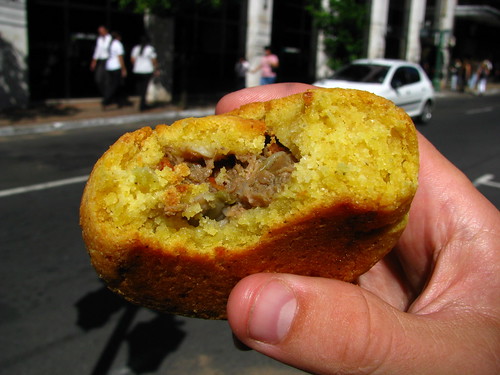
This is chipa so'o. It´s like chipa, except it's filled with a ground beef-and-veggie mixture.
I can´t find a picture of the actual soda, but guaraná soda is AMAZING. Simba is the most popular brand here. It´s flavor is kind of hard to describe, I´m sure I´ll bring some back.
 Lomito is basically a hamburger in a slightly different shape. Lomito and hamburger are both eaten with different toppings here though- fried egg, mayonnaise, salsa, lettuce, tomato, and choclo (corn) are the most common.
Tereré IS Paraguay. We drink it every day, everywhere. Home, school, in the car, outside,  inside, everywhere. Almost everyone has their own Termo, Guampa, and Bombilla. Termo is the pitcher, guampa is the cup, and bombilla is the straw. Tereré is a type of cold tea. First, the guampa is filled with Yerba Mate, a mixture of leaves, about halfway. Then ice water is poured in from the termo. You drink a cup, fill it again, and pass it around. I'm planning on bringing a bunch of this home.
 inside, everywhere. Almost everyone has their own Termo, Guampa, and Bombilla. Termo is the pitcher, guampa is the cup, and bombilla is the straw. Tereré is a type of cold tea. First, the guampa is filled with Yerba Mate, a mixture of leaves, about halfway. Then ice water is poured in from the termo. You drink a cup, fill it again, and pass it around. I'm planning on bringing a bunch of this home.
 23 November 2008
About Paraguay and AFS
Paraguay is a landlocked country in South America, between Brazil, Argentina, and Bolivia. It's about the size of California. Spanish and Guarani (indigenous) are the major official languages. Both Spanish and Guarani are used frequently, with Spanish prevailing in cities and Guarani in rural areas and isolated cities. The east is humid and rainy, the west is dry and arid. It's in the southern hemisphere, so our winter is their summer. (I will arrive in February- the middle of their summer, just before school begins.)
Just under 7 million people live in Paraguay. The capital and largest city is Asuncion. Other larger cities are Ciudad del Este, Encarnacion, Concepcion, Luque, Villa Hayes, Caacupe, Villarica, Pilar, and San Juan Cabalero. Hydroelectricity, generated from several major dams, supply most of the country's power. Soybeans are the most important crop.
Many people are poor, but many of the families able to host exchange students are middle-upper class. School runs on a half-day schedule, with classes being either in the morning, afternoon, or occasionally evening. Usually kids are put into a "track" in high school, such as business, sciences, or arts.
AFS was started in WWI by ambulance drivers from the US as the American Field Service. The group was reformed during WWII, and started exchanges after the war. At first, exchanges were just between the USA and several western European countries, but today high school students from over 50 countries are involved. AFS maintains an international umbrella organization, but is really made up of national organizations in each country. AFS-Paraguay was started in 1962, and hosted US students in 1966 for the first time. Today, AFS-Paraguay hosts about 200 foreign students a year from all over the world, and sends out approximately 150 Paraguayan students.
Just under 7 million people live in Paraguay. The capital and largest city is Asuncion. Other larger cities are Ciudad del Este, Encarnacion, Concepcion, Luque, Villa Hayes, Caacupe, Villarica, Pilar, and San Juan Cabalero. Hydroelectricity, generated from several major dams, supply most of the country's power. Soybeans are the most important crop.
Many people are poor, but many of the families able to host exchange students are middle-upper class. School runs on a half-day schedule, with classes being either in the morning, afternoon, or occasionally evening. Usually kids are put into a "track" in high school, such as business, sciences, or arts.
AFS was started in WWI by ambulance drivers from the US as the American Field Service. The group was reformed during WWII, and started exchanges after the war. At first, exchanges were just between the USA and several western European countries, but today high school students from over 50 countries are involved. AFS maintains an international umbrella organization, but is really made up of national organizations in each country. AFS-Paraguay was started in 1962, and hosted US students in 1966 for the first time. Today, AFS-Paraguay hosts about 200 foreign students a year from all over the world, and sends out approximately 150 Paraguayan students.
Subscribe to:
Posts (Atom)