I have begun the process of figuring out how to get myself back to Paraguay. Basically since the day I got back to the US after exchange, I've been watching ticket prices from Chicago to Asunción. I've tried every combination of times of day, dates, airports, and airlines. To my dismay, the cheapest round trip available during my vacation times has remained around $1400. I'm not quite sure how it happened, but it now appears as though if I fly on Tuesday or Thursday with TACA Airlines, and transfer in Miami and Lima, I can go for just over $1000, fees and taxes included.
To add to the increased possibility of affording a ticket, I have also discovered several grants through my college that I intend to apply for. I'm still working on creating my formal proposal, but I have multiple unpolished ideas. I'll write more about these when I have them narrowed down a bit more, but for now I'm just excited that a return is even in the financial picture.
Regardless of if I receive funding, I should be able to squeak by. I'll be spending the second half of my summer at Camp Anokijig, which is an amazing place. I got involved with camp in 2003, when I was 11, and the only things that have kept me away for a summer are Paraguay and Turkey. I began volunteering in the fall of 2005 when I was 13 in the midst of a panic about camp's future, and have continued since then. I worked as junior staff when I was 15 and 16, missed summer 2009 because of being in Paraguay and China, and would have been senior staff this past summer had I not accepted the NSLI-Y scholarship to Turkey. I've decided that it's about time for me to be back at camp, and will be working sessions 4 through 9. While a camp counselor's salary can look pretty meager, it should be just enough to cover my plane ticket if I don't get a grant, and it's somewhere that I really want to be. I'd rather be making pennies at something I would do for free than spend my summer stressed out about some hated fast food job just to make a little more money.
As for general updates in my life, I am now a freshman at Beloit College in Beloit, Wisconsin. Despite being tiny and obscure, it is an extremely international school. Just in my residence hall, there are students from Senegal, the Bahamas, Taiwan, Malaysia, Vietnam, China, Afghanistan, France, Italy, and Japan, not to mention from all over the US. My major is still officially undeclared, but I'm fairly certain that I will be some sort of Education or Youth in Society major. I'll likely have a second major as well, but I really have NO idea what that will be. I've considered Modern Languages, Spanish, and History, but I'm not going to worry too much about it right now.
I'm also planning on spending a year abroad, likely my third year. I still haven't figured out if I would rather spend a year in one place, or two semesters in two separate places. I have so many choices! Beloit has its own programs in a few places that I'm interested in (Turkey, Ecuador), and they're a part of ACM (Associated Colleges of the Midwest) which administers a program in Juiz de Fora, Brazil that I'm very interested in. Then there are programs like ISEP, who is associated with Beloit as well. ISEP has more options than anyone else; I'm looking into Chile, Malta, Belgium, México, South Africa, Spain, Puerto Rico, and Argentina with them at the moment, but that list changes almost daily.
Needless to say, I've got a lot of "figuring out" to do in the coming months, but I think I'll be happy with basically whatever country I end up in.
Showing posts with label Paraguay. Show all posts
Showing posts with label Paraguay. Show all posts
25 October 2010


28 November 2009
A few months later...

It's been almost 5 months since I left Paraguay, but some things in my life are still Paraguayan. I still have mate and tereré on a regular basis, though not as often as I wish I did. Yerba is ungodly expensive here, and postage from Paraguay is a bit pricey, especially by Paraguayan standards, so I'm trying to stretch what I still have.
For those of you who didn't follow my blog while I was in Paraguay or those of you not familiar with Paraguay, tereré is a kind of tea. See the picture for a visual. It's made out of loose leaves
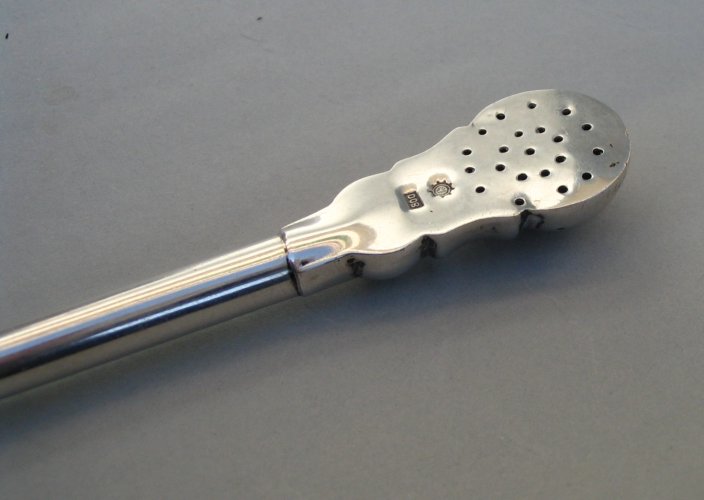 (yerba) and icy water. It is drunk out of a cup made out of metal, wood, or horn called a guampa, and drunk through a metal straw called a bombilla (see picture) that has lots of tiny holes in the bottom so that you don't drink the leaves. Mate is basically the same thing, except hot water is used in place of cold water. Tereré is a social activity in Paraguay. Whenever you go to a friend's house, you can be sure that they'll offer you terere (in the warmer months) or mate (in the early morning and cold months). From the high-class Asunceños (residents of Asunción) to the campesinos (farmers) in the middle of nowhere, everyone drinks terere. On sweltering February afternoons, the best thing to do is just sit with some friends and tomar un terere.
Besides terere on a somewhat-regular basis, I've made Paraguayan food several times. Mbejú is a favorite, and I attempted chipa once. One Sunday a few weeks ago, my Japanese AFS sister, the inbound from Paraguay, and I had a cooking day, and we made mbeju, mandi'o chyryry, mandioca frita, empanadas, and pizza de palmito y huevo. Mbejú is a traditional food made out of cheese, tapioca flour, corn flour, milk, and salt that looks something like a pale-yellow-ish white pancake. Mandi'o chyryry is a dish made with boiled cassava/yucca/mandioca, eggs, and cheese. Mandioca frita is simply fried cassava. Empanadas are basically amazing. They're little fried, folded-over pockets filled with some combination of eggs, vegetables, spices, beef, chicken, cheese, mandioca, peppers, corn, or anything else you could want. Most of these were successfully made, but the mbeju was a little crumbly.
All these crazy words like "mandi'o chyryry" and "mbejú" are Guaraní, if you were wondering. Guarani is an Amerindian language spoken in central South America, that happens to be one of the two official languages of Paraguay (the other being Spanish, of course). I put a handy little phrase list and pronunciation guide on the right hand side of this blog, but if you're looking to (for whatever crazy reason) learn more than a few phrases, I highly recommend that you head on over here. "Here" is a blog/podcast designed to teach/help English-speakers learn Guaraní. It's created by a Peace Corps volunteer who's currently in Yataity, Guaira, Paraguay. I've been using it to learn more advanced Guarani, to add to my lovely bank of insults/swear words that my compañeros so excitedly taught me (Apparently teaching the rubia to yell "Japiro! Ñama kota!" is hilarious...who knew?). Ok, maybe I learned more than that, but in all honesty, I'm still a ways away from proficiency with Guarani Guarani as opposed to Jopará, which is Guarani mixed with Spanish.
Nearly 5 months later, and sigo llevando mucho de Paraguay en mi corazón. I'm still perpetually late, though I at least try now. I don't stress about the little things, and I still think our houses are huge, are roads are amazingly smooth, and everything is expensive. School is still dull, and I still think that people have no balance in their lives. It's all school-work-money or all party-drinking-puking with very little middle ground. The empanada/Ades/alfajór/guaraná cravings still come every now and then. Pepsi is too sweet after a semester of nothing but Coke. My brain still switches to Spanish on a fairly regular basis, and a decent-sized chunk of my iTunes library is devoted to Reggaeton, Cumbia, and Bachata.
I see that this blog is still being read quite often, and I assume that at least some readers are perspective exchange students to Paraguay. If anyone is considering going to Paraguay, feel free to leave your email address in a comment, and I can hopefully answer some of your questions. About a year ago, I was trying to research Paraguay and came up with football/soccer scores, colonial maps, and info on the Chaco, Yguazú falls, and the Itaipú dam. I know that there is basically no information out there about Paraguayan school, food, transportation, or really anything else you really want to know.
28 June 2009
1 week
One week from right now I'll be leaving Pilar on my bus to Asunción.
I'm definitely not ready to be leaving. A semester is really waayy too short; I haven't even had two culture shock-free months. These last few weeks have been amazing, and I wish I could stay here. For any prospective AFSers/exchangers in general reading this- go for a year if you can. You won't regret it. It feels like I'm leaving in the middle of something...
This will probably be my last post from Paraguay.
This has been a crazy six months. I don't even know how I'm going to begin to explain when people ask me about it. Also, everyone, please stop asking "How's Paraguay?" because there is no good answer that you're going to get out of me in less than 20 minutes. It hasn't all been good, but it's not bad either. It's just different, to fall back on the typical exchange organization's mantra.
5 July: Take noon bus from Pilar to Asunción, get there around 6, for sure seeing Abbey, hopefully Kat, Thomas, and basically everyone else in gran Asunción.
6 July: Fly from Asunción to Santiago, Chile in the morning, wait around in Santiago for a while, get on a plane to Miami
7 July: Arrive in Miami (morning), go through customs and immigration, go to Atlanta, go to Milwaukee..
07 March 2009
Cowboys and Birds
So I´ve completed my first full week of Paraguayan high school. Some subjects are surprisingly easy (Matemáticas, Física, Lógica) and others are basically impossible for me (História, Lengua Castellana, Guaraní, Química). In total, there are about 20 or so subjects. I was kinda freaking out for a bit, but someone finally told me that I only have to choose 8 or 9 to actually be graded in, the others are just a formality. I´m still not sure which ones I´m taking, but I should know by the end of the week.
This weekend is CARNAVAL! Last night we went out to eat for a friend´s birthday, then to the parade area. It´s so much fun. Everyone runs around with these cans of spray soap bubbles, attacking everyone else, and there´s a huge speaker system set up blasting the same bizzare mixture of traditional Paraguayan music and reggaeton that seams to always be playing and isn´t sounding quite so bizzare anymore. Every now and then this drumming group comes out and performs. It´s amazing music, the kind that somehow just gives you energy (which everyone needs, seeing as this all doesn´t even start until 10PM or so and goes on all night) and all 15 or 20 members of the group are in perfect sync. They range in age from about 14 to 50, and enlist younger kids to help them carry the equipment. After a few hours of this, the parade starts around midnight. The costumes in the parade are incredible. They´re all similar in design, but all different colors, and slightly different styles. Always beaded, sequined clothes, glittery skin, and elaborately feathered and beaded headdresses and, for lack of a better word, "wings." The wings aren´t really wings, but massive decorations made out of a massive amount of feathers worn on the dancers´ backs. Everything in their costume combines with their stilettos and dancing to make them look like elegant birds. The guys in the parade are all dressed as cowboys, with some added glitter and sequins. I really don´t know how birds and cowboys go together, but I guess for one weekend a year in a small town in Paraguay, they do. The dancers range in age from adults to little girls who couldn´t be more than 6 or 7 years old. I don´t know when this all actually ends, but it was going strong when we left around 2:30 because both of my little brothers had finally fallen asleep.
The flowers here are all so beautiful and exotic looking. Some of them only flower at night, and I´ve been told that the flowers now are nothing compared to what there is in May and June.
In other news, my family has internet now, meaning that pictures will be posted soon! I´m currently working on getting them uploaded, but it´s taking a while. Hopefully I can get them up today, but if not, later this week for sure.
23 December 2008
YES!!!
So I finally got a hold of someone in with AFS USA, and I HAVE A HOST FAMILY! Mom, dad, grandpa, 16-year-old sister, 13-year-old brother, 12-year-old sister, 10-year-old brother. They live in Pilar, Paraguay. It's a medium/small city in the southeastern department Neembucu. There's a German girl and a French guy in Pilar right now who are still going to be there when I'm there. I don't know if anyone else is coming when I am.
23 November 2008
About Paraguay and AFS
Paraguay is a landlocked country in South America, between Brazil, Argentina, and Bolivia. It's about the size of California. Spanish and Guarani (indigenous) are the major official languages. Both Spanish and Guarani are used frequently, with Spanish prevailing in cities and Guarani in rural areas and isolated cities. The east is humid and rainy, the west is dry and arid. It's in the southern hemisphere, so our winter is their summer. (I will arrive in February- the middle of their summer, just before school begins.)
Just under 7 million people live in Paraguay. The capital and largest city is Asuncion. Other larger cities are Ciudad del Este, Encarnacion, Concepcion, Luque, Villa Hayes, Caacupe, Villarica, Pilar, and San Juan Cabalero. Hydroelectricity, generated from several major dams, supply most of the country's power. Soybeans are the most important crop.
Many people are poor, but many of the families able to host exchange students are middle-upper class. School runs on a half-day schedule, with classes being either in the morning, afternoon, or occasionally evening. Usually kids are put into a "track" in high school, such as business, sciences, or arts.
AFS was started in WWI by ambulance drivers from the US as the American Field Service. The group was reformed during WWII, and started exchanges after the war. At first, exchanges were just between the USA and several western European countries, but today high school students from over 50 countries are involved. AFS maintains an international umbrella organization, but is really made up of national organizations in each country. AFS-Paraguay was started in 1962, and hosted US students in 1966 for the first time. Today, AFS-Paraguay hosts about 200 foreign students a year from all over the world, and sends out approximately 150 Paraguayan students.
First Post
This blog is going to be dedicated to my trip to Paraguay as an AFS exchange student. I'm not sure if I'm going to be online much once I'm in Paraguay (this is all stuff I'll find out once I get a host family) but for now, I'm going to assume that I'll have at least a few chances to update it while I'm gone.
I'll be leaving sometime in the beginning of February and getting back in the beginning of August. It seems like so long, and so short at the same time. As of right now, there's not much new news to report. I have my first orientation on December 14th, and I'm still waiting for word on my family and visa.
Subscribe to:
Posts (Atom)